2/23/09

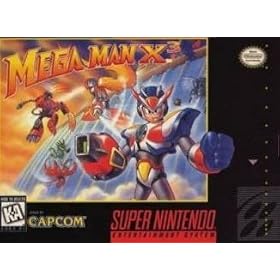
Megaman X3 Walkthrough

Mega Man X3 is a video game released in 1995 by Capcom. It was the third game in the Mega Man X sub-franchise and the last to appear on the Super Nintendo.

Like its predecessor, Mega Man X2, Capcom included the Cx4 chip to allow for some limited 3D graphics and transparency effects. Mega Man X3 was the first game in which Zero is a playable character in addition to X.

he story of Mega Man X3 revolves around a Reploid scientist named Dr. Doppler. In the year 21XX, the threat of the Mavericks had been neutralized thanks to Doppler's technology, which prevented the Mavericks from going berserk. The reformed Reploids had formed a utopia near their new mentor called Doppler Town. It seemed that all was well, until the former Maverick Reploids suddenly reverted and once again began causing trouble. Dr. Doppler was held accountable, and X and Zero were sent out to contain the new threat. They were soon after called back to Maverick HQ, which was under attack by Doppler's forces.

An enhanced version was also released on the Sega Saturn, PlayStation, and PC (herein referred to as the 32-bit CD version) later that year, and the PC version arrived in North America in 1998; the enhanced version included remixed music and anime-style cutscenes.

The 32-bit CD version has made its North American console debut in the anthology collection, Mega Man X Collection.


Differences between the SNES version include:

  • The 32-bit CD versions are noted for including additional animated cut-scenes and remixed CD music tracks, as well as all new sound effects.
  • Mavericks Hunters Intro for FMV. Then, remixed with Mega Man 1 and Mega Man 4's Robot Masters Intro.
The Japanese edition of the CD versions also featured two J-Pop songs by Kotono Shibuya, "One More Time" (opening theme) and "I'm Believer" (ending theme).
The 32-bit CD versions (except for the PC version) also infamously feature load times, including a very long wait when first booting up the game.
The 32-bit CD version of X3 is the version featured in Mega Man X Collection. The animated cut-scenes have been left intact (with the exception of the removal of the J-Pop songs in the intro and ending cut-scenes, it instead uses the original pieces of music found in the European/PC edition) and, finally the infamous loading times are non-existent.
  • The PC version has all of the features from the Sega Saturn and PlayStation versions, but has a bug that manifests on more modern systems. Depending on the player's install method and CD-ROM speed, the maps for Dr. Doppler's lab may not load properly, instead displaying either "garbage" tiles or a black screen, and X can not teleport into the stage (he instead dies instantly when he enters the stage). The best solution to fixing the bug is to install the entire game to the hard drive, thereby eliminating the loading bug and allowing the game to play properly when the player reaches Doppler's lab.
  • The PC version also had a bug which would cause the wire-frame Sigma head in the final segment of the game to be rendered upside-down.
This was the Last game in the Mega Man X series to feature a password feature, which means the player had to enter a password in order to continue their progress on where he or she left off. When Mega Man X4 was released players can now save their game progress on to memory cards on either the Sony Playstation or Sega Saturn versions of the same game. The PC and Sega Saturn versions of Mega Man X3 had save features instead of the password feature.
PLAYLIST

1/18/09

Megaman X7 Walkthrough

Mega Man X7 is the seventh main game in the Mega Man X series, and the first to have 3D gameplay. It is the first in the series to appear on the sixth generation of video game consoles, and the debut of the series on the PlayStation 2.

It was also released for the PC in Asia though it suffered from numerous bugs (such as Zero's hair being "missing" during gameplay.) A patch was later released that fixed numerous bugs, though it was much more difficult to execute than the unofficial English patch. (2008. 08. 27 - on SpeedDemosArchive.com, a speedrun was done, and it looks like the European X7 - what more, the SDA calls it a PC version. It is unsure if that was done on PC or PS2 however, it doesn't have any bugs included.)


As the Reploid Conflicts proceed after the Nightmare Phenomena event, the world is slowly recovering. But as always, Maverick crime goes on the rise at newly constructed cities. As this new crime wave hits, X finds himself trying to answer moral questions that have plagued him since he joined the hunters: "Are we doing the right thing to solve this matter?" Unable to assuage his conscience, he drops from the battle frontlines and assumes a more strategic support role at headquarters. With X's retirement, a massive power vacuum ensues and many independent groups develop, trying and fill the void left by the hunter.

Prominent among these groups is the Red Alert, growing large enough to become a dominant force. The Red Alert Syndicate is a new group of Reploids, similar to the Repliforce, but consisting of vigilantes. They claim to hunt Mavericks, like the Maverick Hunters, but apparently do far more than that. One of their members, Axl, decides he's had enough of their "murdering" and tries to leave the group. Red, the group's leader, is angered by Axl deserting, and goes on a rampage to get Axl back.

Axl is chased by a mechaniloid sent by Red Alert to retrieve him, and their chase causes havoc that calls for the Maverick Hunter Zero to investigate the area. After a quick meeting and battle against the mechaniloid, Zero takes Axl into custody at Hunter HQ. With this action, Red issues a challenge to the Hunters--he will release some Mavericks that Red Alert has in captivity, and whichever group can defeat the Mavericks first will gain custody of Axl.

Zero goes into the action without hesitation, and Axl's remorse for what he has done fuels his desire to become a Maverick Hunter. With no word from X, Axl promises to impress the former hunter, and to not disappoint him. X stays behind, trying to find a more peaceful solution to what he views as another pointless conflict. Eventually, X decides that his involvement in the matter is required to assure the quick end to this bloody war.


Mega Man X7 is a game full of firsts (and lasts) in the series in terms of new gameplay devices. It is the first and last game in the series where the main protagonist, "X" is not available as a playable character from the beginning of the game. Instead it is required that the player meet certain criteria in order to unlock him. Although once he is unlocked, he boasts a larger and more powerful charged shot (without any armor enhancements) than in most of the other games in the series.

"X7" is the first game in the series to have 3D gameplay in addition to the standard 2D style. As this was received negatively by fans, it is also to date the last.

This is also the only X series game where X's buster can be fired directionally (although in 2D form like Axl). This is also the first game in the X series where Zero gains additional attacks in his standing Saber combo and additional weapons; a Glaive and a pair of short swords.

It is interesting to note that this is the only mainstream X series game in which there isn't a special BGM that plays whenever you encounter one of Dr. Light's upgrade capsules. The stage's music continues to play during the armor upgrade process.

The song of the opening movie is "Code Crush" performed by Rina Aiuchi. The ending theme is "Lazy Mind", performed by Shōtarō Morikubo, the voice actor for X in the Japanese games.

PLAYLIST

1/17/09

Mega Man X5 s the fifth main game in the Mega Man X series by Capcom. It was released in 2000 for the PlayStation, three years after Mega Man X4, and in 2002 for PC. It was re-released on January 10, 2006 as part of the Mega Man X Collection for the GameCube and PlayStation 2.

Set an indeterminate amount of time after the events of Mega Man X4, a new plot to destroy the Maverick Hunters is hatched by Sigma, who has been revived again (as in X4, it is unknown who revived him or how). Sigma, after conducting research on the origin and design of Zero, decides to discover how to unlock Zero's true power, hopefully destroying X in the process. Sigma attacks the Maverick Hunters directly, intending to lose. When he does, he spreads the Maverick virus across the Earth, throwing it into chaos. Meanwhile, a Reploid mercenary named Dynamo is hired by Sigma to make the space colony Eurasia collide with Earth. The Hunters have only 16 hours to stop the collision.

In order to prevent Eurasia from striking the planet, the Hunters pursue two options of attack. The first option is to fire a powerful cannon called Enigma at Eurasia, hopefully vaporizing it. If the Enigma shot fails, the second option is to launch a space shuttle and pilot it into the colony, destroying it. To maximize their chances, X and Zero are dispatched to collect parts for the two devices. The necessary parts to upgrade the Enigma and shuttle are held by eight Reploids and Mavericks), and X and Zero must defeat them to claim the parts. Further complicating matters, Dynamo repeatedly attacks the Hunters' base during the course of the game, forcing X and Zero to waste valuable time fighting him off.

(It may be interesting to note that though the game manual says that the Repliforce was destroyed, the Skiver has the Repliforce symbol on his head, and the "Repli-air force" is mentioned as still existing, to the surprise of Alia.)

Whether the Enigma and shuttle succeed or fail is randomly determined by the game, although the Enigma's chances of working successfully are low even with all its parts, while the shuttle has a much higher probability of succeeding assuming all of the parts are collected. Whether the Enigma succeeds or fails, a "new" virus appears on the Earth, noted by Alia as the Sigma virus combining with the scraps from the colony. If the Enigma succeeds, the player can proceed to hunt for the cause of the virus without fighting the remaining Mavericks (though it is still recommended to do so, in order to get weapons and items from the Mavericks). If the shuttle (piloted by Zero) succeeds, the hunt for the cause of the virus begins as well. If the shuttle fails or if the time expires, the colony crashes, nearly destroying the planet; Zero then is infected by the virus and goes Maverick, removing him from the game as a playable character.

In either case, once the location of the virus' origin is discovered, the Hunters must investigate it. X (and Zero if he's still playable) penetrate a bizarre underground fortress, based on levels from previous games and featuring enemies from the distant past. Finally in the third stage of the fortress, X and Zero cross paths, where mutual suspicion and mistrust leads to a duel between the heroes (which had been foreshadowed since the end of Mega Man X2).

After the duel, the story diverges slightly. If Zero went Maverick, he sacrifices himself to save X from Sigma, and X continues on alone to defeat Sigma in the final stage. If Zero did not go Maverick, he saves X and himself from Sigma, and both have a chance to confront Sigma in the final battle. There are three possible endings for the game; X has two and Zero has one.

If Zero went Maverick, X defeats Sigma, but is badly damaged. A mysterious figure recovers him, but also deletes all of his memories of Zero, either by mistake, or intentionally. X is seen, three years later, talking to two other hunters, while Douglas, Alia, and Signas discuss the fact that X's memory of Zero has been deleted. This ending is treated as non-canon by Capcom, as there are further games where X and Zero work together.

If Zero did not go Maverick, Sigma decides to make the Hunters' victory for naught by taking them down with him. X tries to save Zero but is ambushed by Sigma and both Hunters are critically damaged. Zero manages to finish Sigma off, then the endings diverge again. If Zero defeated Sigma, he reflects on his origin and life before dying. If X defeated Sigma, he inherits Zero's beam saber and continues to fight as a Maverick Hunter. This is considered the "true" ending.

In each of X's endings, the mysterious figure is shown to be a hologram of Dr. Light, who discovers X's badly damaged body after the battle with Sigma and repairs X, saying "Not yet...Actually, I want you to rest and relax for now. Hold on X... Just for a few more moments."


X5 was developed by a different team than X4, and this is evident in the style of gameplay. The most prominent difference in this iteration is the time limit of 16 hours(though sometimes the game or manual will say 24 hours), until the space station Eurasia crashes into Earth. If the crash is not prevented, this does not end the game-it merely changes the course of the story. Every time the player enters a stage, one hour is expended. Due to the nature of the storyline, there are multiple endings to the game. Which ending is seen depends on such factors as whether or not the crash of Eurasia is prevented, and whether X or Zero is used to defeat the last boss.

The change in gameplay was widely viewed by fans as being nontraditional. There were four armors for X -- his Ultimate Armor, the upgraded armor from Mega Man X4, and two others that had to be assembled from capsules. However, X couldn't wear parts of these armors separately. In previous Mega Man X games, X always upgraded what he had (the helmet, legs, armor, and his buster) and they were changed the moment he entered the capsule. X could also no longer shoot his buster through walls, and for the first time ever in a Mega Man game, each character has the ability to duck (though considered nontraditional, this was widely applauded by fans ).

Dr. Light's capsule holograms are also depicted as AI instead of a pre-recorded message. Zero is able to find and use the capsules; in these cases, not only do Zero and Light have conversations, but Dr. Light tells Zero that Alia should be able to use the programs from the capsules to assemble X's armors. While fewer than Zero's, X has had conversations with the hologram of his creator Dr. Light as is seen in the next few games, X6-X8.

PLAYLIST

1/14/09

Megaman X2 Walkthrough

Mega Man X2 was released in 1995 by Capcom and is the second game in the Mega Man X sub-franchise. It used the same graphics engine from the first installment of the series, but Capcom included an in-cartridge enhancement known as the Cx4 chip to improve semitransparencies and allow for some 3D graphics in the game. Mega Man X3 was the only other game to ever use this chip. Like the first game, it is praised for its soundtrack.

The subtitle Versus X-Hunters is given in the opening story; the Japanese version's full name is Rockman X2: Versus Counter-Hunters.

The game was re-released on January 10, 2006 as part of the Mega Man X Collection for the GameCube and PlayStation 2.


Six months and 13 days after defeating Sigma, X assumes leadership of the Maverick Hunters. Despite Sigma's death, the Maverick Rebellion continues. X has tracked the remaining Mavericks to a Reploid factory, and launches a full assault. But this was not the end of the war.

Three of the Maverick leaders, Serges, Agile, and Violen, form a group called the "X-Hunters" ("Counter Hunters" in the Japanese version) and gain control of the North Pole. In the time between Sigma's demise and their sudden uprising, Serges has collected the parts of Zero, who had died in the first conflict (in the Japanese version however, it is stated that Serges ("Sagesse" in that version) didn't salvage Zero's parts but created new ones, but still lacks Zero's original Control Chip). The X-Hunters contact the Maverick Hunters and taunt them with Zero's body, which they have split into three pieces, in order to lure out X, hoping to destroy him.

Mega Man X2 is an action game, where the player is given a selection screen of stages to begin, When selected, the player uses Mega Man X to blast various enemies throughout the level and reach the boss character, where defeating it wins the stage and earns a new weapon to utilize for the player.

1/7/09

Prince of Persia 2 The Shadow and the Flame Walkthrough


Prince of Persia 2: The Shadow and the Flame is a platform game released by Brøderbund in 1994.

Similar to the first Prince of Persia, the character explores various deadly areas by running, jumping, crawling, avoiding traps, solving puzzles and drinking magic potions. Prince of Persia 2 is, however, more combat-heavy than its predecessor. In the first game, enemies appear only occasionally and are always alone, while in the sequel, up to four enemies may appear at once, sometimes flanking the player, and may even be instantly replaced by reinforcements when they are killed. As in Prince of Persia, the trick is to complete the game under a strict time limit that passes in real time. Lives are unlimited, but time cannot be regained except by reverting to a previously saved game. In other areas, more significant improvements have been made. The graphics are far more complex than the simple look of the game's predecessor, the areas explored are larger, and the variety of backdrops is greater.

And it´s very bad compared with the original.

The game takes place eleven days after the events of the original Prince of Persia. During this time, the Prince is hailed as a hero who defeated the evil Jaffar. He turns down all riches and instead asks for the Princess' hand in marriage as his reward, which the Sultan of Persia reluctantly agrees to. The Prince and Princess are married and live happily for eleven days.
The Shadow and the Flame begins with Jaffar being brought back by a witch who hates the Prince. As the Prince enters the palace eleven days after marrying the Princess, his appearance turns back into that of a beggar. Nobody recognizes him, and when he enters the throne room, guards are ordered to throw him out. Out from the shadows steps Jaffar, who has taken on the Prince's appearance, as well as his role. With guards rushing him, the Prince jumps through a large window and flees the city by the sea. The ship in which the Prince escapes on crashes, and he finds himself on the shore of a foreign land. A woman appears in his dreams and tells him to avenge his father. Throughout the events of The Shadow and the Flame, it is revealed that the Prince is really of royal lineage. His father was killed and his mother had to abandon him, to save him from his parents' fate. At the end of the game, the Prince goes back to Persia to again defeat Jaffar, saving Persia once again.

Titus Software ported the game to the Super NES and released it in 1996. Due to some missing features and stages, it is considered an inferior port.

On August 11, 2006, drx of Hidden Palace, a ROM-specialized website, released the long lost Mega Drive version, ported by Microïds and with a planned release in 1996 by Psygnosis, but finally canceled in an almost complete state.

The game can also be unlocked in the Xbox NTSC version of Prince of Persia: The Sands of Time by finding a secret area. The GameCube, PlayStation 2 and Xbox PAL versions of the game lack Prince of Persia 2, with that secret area unlocking the original Prince of Persia early instead. The PC version lacks the secret entirely.

The makers of Prince of Persia Classic hinted that they may remake the game in 3D for the XBLA along with other side-scrolling games.
PLAYLIST

1/4/09

Earthworm Jim Walkthrough


Earthworm Jim
is a run and gun platform video game starring an earthworm named Jim in a robotic suit who battles evil. The game was developed by Shiny Entertainment, released for the Sega Mega Drive/Genesis in 1994, and subsequently ported to the SNES, Game Boy, Game Gear, Sega Master System, and years later, the Game Boy Advance. Upon its release it was praised for its detailed animation, polished gameplay and wacky humor; it became the first game ever to receive a 100% review in GamesMaster magazine. A special edition of the game was released for the Sega Mega-CD which features a Red Book audio soundtrack, improved graphics and expanded levels , and an even further enhanced version with redrawn, 256 colour graphics and an Earthworm Jim desktop theme, as well as all the Mega-CD improvements, was released for Microsoft Windows 95. The Sega Mega Drive version was released through Nintendo's Virtual Console service in Europe on October 3, 2008, and in North America on October 27, 2008.

The storyline involves many colorful characters. Jim himself (a character designed by Doug TenNapel) was at first an ordinary Earth earthworm who did very earthworm-like things such as flee from crows and eat dirt. One day, in the space above Earth, the evil Psy-Crow had cornered a rebel spaceship pilot who had stolen an "Ultra-high-tech-indestructible-super-space-cyber-suit" built by Professor Monkey-For-A-Head. The suit had been commissioned by the evil Queen Pulsating, Bloated, Festering, Sweaty, Pus-filled, Malformed, Slug-for-a-Butt so that she could further conquer the galaxy. In the ensuing space fight, the suit was dropped to Earth, and fell on Jim. By a stroke of luck, Jim managed to land within the collar of the suit, and it ended up mutating him into the large and intelligent (at least by earthworm standards) superhero he is today.

Jim overhears Psy-Crow talking to Queen Slug-for-a-Butt about the scorch marks left by the suit and her plans for her sister, Princess What's-Her-Name. Jim thus sets out to rescue the princess, fighting many enemies along the way, such as Major Mucus, Chuck and Fifi, Evil the Cat and Bob the Killer Goldfish, although none of this is apparent throughout the game.

The gameplay of Earthworm Jim is very bizarre, to say the least. Launching cows, using Jim's head as a whip, and other bizarre twists add to the insanity. The player controls Jim at all times of the game. In the level sections, Jim can run, use his gun, swing on hooks, and get powerups for the blaster. The in-between levels called Andy Asteroids place Jim in a semi-3D race against the evil Psycrow. If Psycrow wins, then Jim must fight him in one-on-one combat in order to progress. Throughout the game were many added features, such as mini-bosses whose weaknesses Jim would need to find through trial and error. Crystal treadmills, underwater pod races, and other related things also appear.

In 1999, Interplay had plans to make several of its games into movies, with Earthworm Jim being one of them. Since then, no movie was ever made.

Earthworm Jim 3D paid tribute to the original Earthworm Jim, by having Jim initiate a "Fridge Launch" in the first level, similar to how a "Cow Launch" occurred in the first level of the original. Unlike Earthworm Jim, which had a single cow occasionally fly by in the level background, five fridges were launched (six in the PC version). In the PC version, the first fridge falls on Jim in the intro (In the Nintendo 64 version, this fridge was replaced by an N64 logo). The other four fridges landed on characters just as Jim helped them out, with one fridge in each brain. Seeing the fridge for Fear is entirely optional. Humorously, the fridge in Fantasy missed its target, but a safe containing a Golden Udder inexplicably falls instead. The joke climaxes by having the final fridge fall on top of Jim in the game's ending.

PLAYLIST

1/3/09

Megaman 2 Walkthrough


Mega Man 2 is a platform game developed and published by Capcom for the Nintendo Entertainment System. It is the second installment in the original Mega Man series. The game was released on December 24, 1988 in Japan, and later in 1989 and 1990 in North America and Europe, respectively. Mega Man 2 continues the titular protagonist's battle against the evil Dr. Wily and his rogue robots. The game features several graphical and gameplay changes from the first Mega Man game, many of which have remained as elements throughout the series.

Although sales for Mega Man were unimpressive, Capcom allowed Keiji Inafune to create a sequel. With more than 1.5 million copies sold, the game is the best-selling Mega Man title. Mega Man 2 has received high praise by many publications as the best title in the series as well as one of the greatest video games of all time. Mega Man 2 has been rereleased on several consoles and has most recently made its way to mobile phones. It was released on the Wii's Virtual Console in Europe in December 2007, in Japan on August 26, 2008 and in North America on September 15, 2008.

Mega Man 2 takes place after the original Mega Man, which was set in an unspecified year during the 21st century (the year 200X). Dr. Wily, the series' main antagonist, built a new fortress and army of robotic henchmen, led by eight new Robot Masters of his design. Mega Man was sent by his creator, Dr. Light, to defeat Dr. Wily and his Robot Masters.

Mega Man crushed the eight new Robot Masters and then sought Wily himself. In the final fight, Mega Man defeated Dr. Wily's holographic projection device. After the scientist begged for mercy, Mega Man spared Wily and then took a long walk home to think about his decision

Mega Man 2 is a platformer and action game like its predecessor, Mega Man. The player controls Mega Man as he traverses eight different stages to defeat the bosses, Dr. Wily's Robot Masters. Mega Man gains the signature weapon of each Robot Master after defeating him. The Robot Masters have weaknesses to the weapons of certain other Robot Masters; therefore, choosing the order in which the levels are played is a vital component of the gameplay. After completing certain stages, Mega Man receives a special item. These items create platforms that allow Mega Man to access areas that the he could not otherwise.

After defeating the eight Robot Masters, the player proceeds to Dr. Wily's fortress, which consists of six levels that are played linearly. As in the original Mega Man, the player is required to fight each Robot Master a second time in Dr. Wily's fortress. However, in Mega Man 2, these battles take place in a single room with teleportation devices that lead to each Robot Master. The devices can be entered in any order, but are not labeled.

The North American release of the game has two difficulty modes: normal and difficult. The "difficult" setting is the standard difficulty level that was used in the Japanese version, while the "normal" setting makes all enemies and Robot Masters weaker. Rereleases in North America do not contain this feature and instead default to "difficult". The choice of difficulty mode has no effect on the password system.

Mega Man 2 added several new gameplay elements. The E-Tank allows a player to refill Mega Man’s health at any time. These are found placed throughout the game. Also introduced is a password system. After defeating each Robot Master a password is displayed, allowing the player to return to that particular point in the game after restarting the system. The password stores the particular list of completed Robot Masters, as well as the number of E-Tanks that the player has accumulated.

Several features available in Mega Man were removed. Unlike the original Mega Man, the game does not keep a running score for the player. The player is unable to return to Robot Master levels once they have been completed.

Despite relatively low sales of the first Mega Man game, Mega Man 2 was a huge success. Since its 1988 release, Mega Man 2 has sold over 1.5 million copies worldwide. The game is the highest selling in the Mega Man series and is Capcom's 20th highest selling title. Mega Man 2 was named by GameSpot as one of "The Greatest Games of All Time". It ranked at number 33 in Nintendo Power's "Top 200 Nintendo Games Ever" list. It ranked fifth on Game Informer’s list of The Top 10 Video Game Openings. Creator Keiji Inafune claims the success of Mega Man 2 is what made the Mega Man series a hit that continues to spawn sequels. In ScrewAttack's "Top 10 Video Game Themes Ever" video, the Doctor Wily Stage Theme is ranked second in the countdown, behind only The Legend of Zelda Theme.

PLAYLIST

12/31/08

Prince of Persia the Sands of Time Walkthrough


Prince of Persia: The Sands of Time is a third-person action-adventure computer and video game published by Ubisoft. It was released on November 6, 2003 and is a continuation of the landmark MS-DOS and Macintosh game series Prince of Persia, created by Jordan Mechner in 1989.

The Sands of Time, developed internally at Ubisoft Montreal, successfully captures the mechanics of the original platformer and extends it to the 3D generation. An earlier attempt by The Learning Company to transfer the game to 3D (Prince of Persia 3D) was released in 1999, but failed to meet the standards set by the franchise. The Sands of Time was praised for its visual design, finely tuned game mechanics, and intriguing storyline, winning the game several awards.

The game was developed for the PC, PlayStation 2, Nintendo GameCube, Xbox, and later a 2D version for the Game Boy Advance and mobile phones. The success of The Sands of Time led to two sequels, Prince of Persia: Warrior Within and Prince of Persia: The Two Thrones, in 2004 and 2005, respectively.

Prince of Persia: The Sands of Time combines exploration and combat to create a unique synthesis. Both elements make use of the Prince's acrobatic capability and agility. Throughout much of the game, the player must attempt to traverse the palace by running across walls, ascending or descending chasms by jumping back and forth between walls, avoiding traps, climbing structures and jumping from platform to platform, making other types of well-timed leaps, solving puzzles, and using discovered objects to progress. The cultural setting of the game provides many linguistically interesting inscriptions to be found on walls.

During combat, many of the same moves vital to the player in other situations can be put to use to overpower enemies. Such an example is the ability of the Prince to rebound off walls in order to strike enemies decisively. The player can also vault over the enemies backs and then finish them off in two hits. The player generally attacks enemies and blocks using a sword, although other objects/factors, such as the Dagger of Time and its time-control abilities eventually prove to be critical to victory.

A pivotal gameplay element is the Prince's Dagger of Time. It contains "charges" of the Sands of Time from the hourglass that allow the Prince to control time. The Prince has the ability to "reverse" time and travel up to ten seconds into the past. While using this ability, all sounds and previous action play backwards, and the play environment accurately resets to its previous state. For example, if the Prince was struck by an enemy attack during the rewind period, the health he lost will be given back to him, or a bridge that was destroyed a few seconds ago will repair itself. The Dagger also allows the prince to slow down time, and freeze his enemies, using it as a main-gauche to attack them directly.

The Dagger does not come with an unlimited number of uses. However, defeated enemies leave behind piles of the Sands of Time, which can be absorbed by the Dagger to replenish its stock. The stock can also be replenished by absorbing Sand clouds. This encourages the player to confront and vanquish enemies (as opposed to avoiding them) in order to replenish the power to manipulate time during the more tricky acrobatic sections of the game. It must, however be noted that if the player does not absorb the Sand from a fallen enemy in about five seconds, said enemy will come back to life. Extra Sand Tanks can be gained by collecting eight Sand clouds, and extra Power Tanks (which are used for different powers than the Sand Tanks) are gained by vanquishing sixteen enemies after having collected a new Sand Tank.

Later on, when Farah takes the Prince's sword and dagger, he finds an extremely powerful new sword hidden in a large room, which has the capability to dissolve the Sand creatures instead of incapacitating them.

PLAYLIST

12/30/08

Megaman and Bass Walkthrough


Mega Man & Bass, known in Japan as Rockman & Forte is a game in the original Mega Man series. It is said by Keiji Inafune to be an alternate continuation to Mega Man 8, and is parallel to Mega Man 9,[citation needed] although it is referenced during the ending of Mega Man 9. The original Super Famicom version of Rockman & Forte was released exclusively in Japan in 1998 and was one of the final third party titles for the console. During development, the game was labeled "ROCK8.5 It was released later for the Game Boy Advance and is only version to be released overseas.

In the year 20XX, after a year of peace since the emergence of the "Evil Energy" on Earth and its use by Dr. Wily to build extremely powerful robots to take over the world, a new villain arrives who goes by the name of "King."

At first the goals of this new, arrogant being seem unclear, but after a while they become quite certain. King desires to create a utopia in which robots will be able to live in peace and harmony. The only problem with this goal is that humans are left out of the picture, and as far as King is concerned, they are the enemy.

King desires to build a massive army of robots with which to build his utopian world, so he breaks into the Robot Museum and collects all of the Data CDs upon which the information of the creations of Dr. Light and Dr. Wily are stored.

Even though he is a pacifist by nature, Mega Man has a strong sense of justice and knows that King's goals are against everything that he and Dr. Light stand for. Dr. Light tells him that he must go at once to the Robot Museum and put a stop to King's plans before they get out of hand.

However, Mega Man is not the only one who has a bone to pick with King. Bass, Dr. Wily's most powerful creation, is quite upset with King proclaiming to be the most powerful robot in the world. Bass, who is quite arrogant himself, decides to prove that he is the strongest of them all by tracking down and defeating King before his rival, Mega Man, can.


Tengu Man and Astro Man both make reappearances in this game, but only Tengu Man retains his previous attack pattern--with some minor changes to mix it up.

King has constructed six of his own unique Robot Masters to confront Mega Man and Bass, along with two who join his armies that were originally creations of Dr. Willy.

eleased in 2002 in Japan, and in 2003 in North America and Europe, Mega Man & Bass for the Game Boy Advance was the game's U.S. and Europe debut. This version is almost completely identical to the original Super Famicom version, though certain instruments of the soundtrack have been toned down due to the fact that the Game Boy Advance uses a combination of software sound and the four sound channels carried over from the original Game Boy which when not used correctly, provide fairly weak sound quality.

The game is largely unchanged from the Super Famicom version besides the story to accurately depict it to follow Mega Man 8, an auto-save feature and some bug fixes: occasional sprite flickering and music corruption due to too many sound effects being played at once have been corrected. Additionally, due to the lower resolution of the GBA's screen, players were forced to view the game from a zoomed-in perspective and as a result were unable to see many pitfalls that were visible in the SFC version (such as spikes in Tengu Man's stage).

PLAYLIST


12/27/08

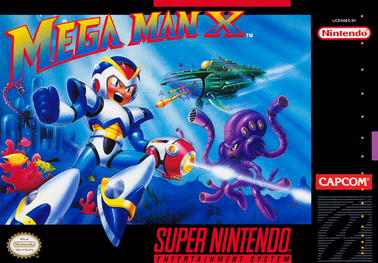
Megaman X Walkthrough


Mega Man X released in late 1993 by Capcom, is the first game in the Mega Man X series. The first subseries of the popular Mega Man series, it was made primarily as a stepping stone between the NES and SNES incarnations of the original series, as Mega Man games were released on the NES as late as 1994.

The game was first released on the SNES; it was published for the console by Capcom in the US and Japan, and later published in Europe by Nintendo that same year. It was then ported to the PC in 1995, remade in 2006 as Mega Man Maverick Hunter X (Irregular Hunter X in Japan), for the PlayStation Portable, and re-released on January 10, 2006 as part of the Mega Man X Collection for the Nintendo GameCube and the PlayStation 2.

The Mega Man series has always consisted of action games that focus on run-and-gun gameplay. The player takes control of Mega Man X ("X" for short), a Maverick Hunter who seeks to stop Sigma's rebellion against the humans. After an introductory stage, the player is presented with a stage selection screen that depicts eight Maverick boss characters.

After the player selects a Maverick to battle, X is teleported into the Maverick's base of operations. The player must dodge obstacles, destroy enemies and other hazards, and avoid depletion of X's life bar. Defeating a stage and its boss Maverick rewards X with the boss's weapon, which can be used in rock-paper-scissors fashion to defeat other boss characters. Every boss is weak to another boss's weapon. This mechanic is carried over from the Mega Man Classic series; Capcom maintained the tradition throughout the new series, with a few twists. In the X series, completing a stage may affect the environment of other stages, possibly making them easier or more hazardous.

Mega Man X introduces hidden upgrade capsules to the Mega Man franchise. These appear in several stages in this game, and display a holographic message from Dr. Light when approached. Each capsule upgrades one of X's body parts; each upgrade gradually replaces his original blue armor (resembling that of the original Mega Man) by the white and gold armor seen on the game artwork, and grants X increased weapon power, stronger armor, or new maneuvers. The player can also increase X's life energy by obtaining Heart upgrades, one per each Maverick stage.

PLAYLIST

12/26/08

Castlevania Dracula X Walkthrough

Castlevania: Dracula X is a platform game developed and published by Konami and based on Akumajou Dracula X: Chi no Rondo, which was previously released on the PC Engine in 1993 (never released outside of Japan until the 2007 PSP remake Castlevania: The Dracula X Chronicles). It is the final Castlevania installment to be released for the Super Nintendo Entertainment System. It shares the gameplay and storyline of Chi no Rondo, but the levels had been completely redesigned and other elements were completely taken out of the game. In Japan, it is known as Akumajō Dracula XX and in PAL regions, it is known as Castlevania: Vampire's Kiss. Castlevania: Dracula X was released in Australia in an uncensored version, and under the Vampire's Kiss title.

In the PC Engine version, four paths can be taken through the game, while the SFC/SNES release featured only two.[1]


The setting: medieval Transylvania. One hundred years have passed since legendary hero Simon Belmont defeated the evil Count Dracula and sealed him away for what was supposed to be eternity(Making the game set in 1791). The people have long since forgotten about the horror of the undead, thus allowing a few depraved individuals to restore the Prince of Darkness to his former state; sleeping in his coffin by day and preying upon hapless victims by night.

Dracula now plans to get revenge on his old enemy through his descendants by locking Annet, the girlfriend of Belmont's great grandson, Richter, and her sister, Maria, in his dark and gloomy castle.

Once aware of this, Richter takes his ancestor's sacred whip, passed down through the years from father to son, and sets out for Dracula's castle to rescue Annet and Maria, and to seal away the evil Count for good.

IGNs retrospective on Castlevania referred to this game as one of the best traditional Castlevania games, and that it "holds its own" in terms of graphics, including a brighter color palette, and Mode 7 graphics. They said it did suffer, however, from weak A.I and poor level layout.[1]

This and few other Castlevania games have been retconned by Koji Igarashi, and are no longer apart of the series's continuity.

PLAYLIST

12/25/08

Megaman X4 Walkthrough

Mega Man X4 is the fourth game in the Mega Man X series. This game was originally released on July 31, 1997 for the Sega Saturn in North America. Both the Sega Saturn and PlayStation versions were soon released simultaneously on August 1, 1997 in Japan. The PC version was released in January 1, 1998, and runs in operating systems after and including Windows 95

The gameplay is similar to the previous installments of the X series, but there are some important changes:

At the beginning of the game, the player chooses to play either as X or Zero. Unlike future games in the Mega Man X series, the player is committed to the choice throughout the game (i.e., he/she cannot switch to the other character at any time). Though both of them go through the same stages, they operate differently, and get different challenges from the terrain. They must avoid obstacles like falling debris and spikes, and destroy enemy robots to reach the end of the stages.

X wields a plasma cannon (X-Buster) on his arm that he uses to attack foes from a distance. It can be charged to fire stronger shots. When he defeats a boss, he gains a new weapon for his Buster. These weapons have limited ammo, displayed by a meter next to his health. In some stages, X can find capsules that contain upgrades that greatly enhance his capabilities.

Zero is more melee-oriented than X, using a saber (Z-Saber) rather than his usual arm cannon (Z-Buster). Its power and accuracy compensate for his lack of range. Not all of his moves are weapon-based— rather than acquiring weapons from bosses, he learns "techniques" such as the air-dash (Hienkyaku) and double-jump (Kuuenbu). However, Zero cannot upgrade any of his body parts in this game.

This is the first X game where your characters have conversations with the bosses before the battle begins, rather than the boss simply entering the room and attacking immediately. For this reason, there is no music specifically used to accompany the boss's entrance, as was the case with the first three games.

PLAYLIST

12/7/08

Contra Walkthrough


Contra Nes Walkthrough
irst game in the series. Many of the series' convention such as power-ups, 2-player cooperative gameplay and the character's light mobilty (including somersaults) were already present in this game. The game is composed of traditional side-view stages that scrolls vertically and horizontally, as well as "3D view" stages in which the player moves towards the backgrounds. The NES version is essentially identical to the arcade version in terms of content, but has longer stages and other modifications. In Japan, the Famicom version uses the VRC2 chip, which allowed for additional background animation and cut-scenes not included in its North American NES counterpart. An MSX2 version was also produced that is drastically different from the other two versions.

PLAYLIST

10/12/08

Super Star Wars Walkthrough

Super Star Wars Walkthrough SNES Version
I just love this game, loved it as a kid and i still like it.

Super Star Wars is the first of a series of three Super Nintendo games based on the original three films of the Star Wars series. The term Super Star Wars can refer to the first game or to all three games collectively. All three are essentially platform games, although they all have stages which feature other challenges, such as driving a landspeeder or piloting an X-wing. All three games also feature multiple playable characters with different abilities

Super Star Wars is a remake of Star Wars, a lesser-known game released in 1991 for the Nintendo Entertainment System, Sega Master System, Game Boy and Game Gear.

Originally, the game design was planned to give the characters a dark black outline around their bodies, similar to Ultima VIII: Pagan. However, this idea was abandoned, as it was thought to make the characters too cartoonish-looking.

The final boss in the game is Darth Vader in his TIE Advanced x1.

There was a trash compactor level that was deleted from the game due to memory constraints. An image was published in an issue of Electronic Gaming Monthly around the time of the game's release.

The entire Super Star Wars series earned mostly acclaim from both critics and fans. Its graphics were considered cutting-edge for their time, with the driving stages employing Mode 7 graphics, a primitive form of 3D of which the Super Nintendo hardware was capable. Particularly well-received was the game's lush sound, with its accurate representation of the film's famous John Williams soundtrack. On the negative side, the entire series would develop a sort of notoriety for its unforgiving difficulty, which would often frustrate all but the most skilled players.

PLAYLIST

Ultimate Spiderman Walkthrough

My Ultimate Spiderman Walkthrough Xbox Version
This was a fun one. I enjoyed replaying this one.

Ultimate Spider-Man is a superhero comic book series published by Marvel Comics. The series is a modernized re-imagining of Marvel's long-running Spider-Man comic book franchise as part of its Ultimate Marvel imprint. Ultimate Spider-Man exists alongside other revamped Marvel characters in Ultimate Marvel titles including Ultimate X-Men, Ultimate Fantastic Four, and The Ultimates.

Ultimate Spider-Man was the first series to be published in the Ultimate Marvel line. Publisher Bill Jemas wanted to reinvent the Marvel Universe because he felt that, with over 40 years of back-story, it had become inaccessible to new readers, and he wanted to start with a reinvented Spider-Man. Initially, Marvel Editor-in-Chief Joe Quesada was skeptical because 1998's Spider-Man: Chapter One, a previous attempt at re-envisioning Spider-Man's early adventures, had failed both critically and commercially.[3]

Marvel writer David Mack suggested indie writer Brian Michael Bendis, whom Jemas and Quesada chose to write the new series. Marvel approached veteran Spider-Man artist Mark Bagley, who initially was not interested in joining the project and turned it down several times before signing.[4]

The original Amazing Fantasy #15 story was only 11 pages long, but Bendis retold it as a 180-page, seven-part story arc in which Peter Parker becomes Spider-Man only after issue #5. Bagley was at first wary of Bendis' notoriously slow pace in advancing plot, describing it as a "real shock" at first.[5] Previously, Jemas intended the comic to feature single-issue stories only, but Bendis chose his own way.[6]

The first several issues were greeted with enthusiasm from fans and critics, sold well, and gave Ultimate Marvel a boost in credibility. After the release of Ultimate Spider-Man, Quesada and Jemas broadened the Ultimate Marvel line with Ultimate X-Men, The Ultimates and Ultimate Fantastic Four. Ultimate Spider-Man #1 was voted the "ninth-greatest Marvel Comic of All Time" in 2001 by readers of Wizard: The Guide to Comics. In addition to critical success, Ultimate Spider-Man grew to outsell the flagship Spider-Man title, Amazing Spider-Man.[7] Bendis would later describe issue #13, in which Peter tells Mary Jane his secret identity, as his favorite issue because it shows the trust the Ultimate Marvel office had in him.[8]

As the series progressed within the next two years, reception and sales stayed strong, helped by the fact that Bendis and Bagley quickly found chemistry and liked working with each other.[9] Eventually, several 'mainstream' characters were introduced into the story. Bendis, disliking the mainstream version of Venom and its extraterrestrial origin, completely reinvented the character.

On August 16, 2006, Mark Bagley announced he would be leaving the book as of Ultimate Spider-Man #110. Bagley and writer Brian Michael Bendis worked on the series together since it began. Artist Stuart Immonen, already famous in the Ultimate Universe for his work on Ultimate X-Men, took over after Bagley. Issue #111, named "The Talk", introduced readers to Immonen's art for the first time. The issue was divided into two parts, with Bagley covering the art for one section, and Immonen doing the other.

PLAYLIST